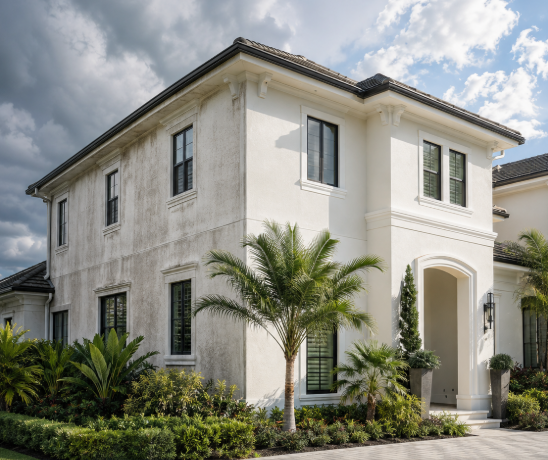

If you moved to South Florida from another part of the country, your expectations about exterior paint may need an adjustment.
A paint job that performs one way in a mild climate faces very different conditions here.
South Florida homes deal with intense sunlight, high humidity, frequent rain, heat, salt exposure in some areas, and biological growth. Add stucco movement, irrigation overspray, and occasional severe weather, and the exterior coating becomes an important protective layer rather than simply a cosmetic finish.
So how often should you repaint?
There is no responsible answer based on a single number.
The better question is: what condition is your current coating in?
A Typical Repainting Cycle Is Only a Starting Point
You will often see recommendations suggesting that Florida stucco homes be repainted approximately every five to seven years.
That is useful as a planning benchmark, not a deadline.
A well-prepared home using a quality coating system may perform longer. A poorly prepared surface or heavily exposed elevation can show deterioration much sooner.
The actual repaint cycle depends on several factors.
1. The Quality of the Previous Paint Job
This is one of the biggest variables.
A professional exterior paint job is not simply two coats of expensive paint.
Its longevity starts with the substrate.
If the previous contractor painted over chalking, contamination, loose coatings, or unrepaired cracks, premature failure can occur regardless of the product used.
Proper preparation takes time, which is why unusually inexpensive exterior painting proposals deserve closer examination.
2. Sun Exposure
South Florida sunlight is relentless.
South- and west-facing walls frequently receive more intense solar exposure and may fade or deteriorate sooner than shaded elevations.
This can create an interesting situation: one side of your home may still look good while another is clearly ready for attention.
Do not judge the condition of your exterior from the front entrance alone.
Walk around the entire property.
3. Your Exterior Color
Color influences how noticeable weathering becomes.
Deep, saturated colors can show fading more dramatically than many lighter colors.
A dark accent wall that looked almost black when installed may gradually appear washed out after years of UV exposure.
This does not mean you should avoid dark colors. It means color selection should consider exposure and maintenance, not just a small paint chip viewed indoors.
4. Moisture and Irrigation
South Florida homes encounter moisture from more than rainfall.
Sprinklers repeatedly hitting exterior walls can leave mineral deposits, encourage staining, and keep surfaces wet.
Landscaping positioned tightly against a house can reduce airflow.
Gutters, roof drainage, window leaks, and other moisture sources can also affect coatings.
If paint deterioration is being caused by an underlying moisture issue, repainting without addressing that issue can result in the same problem returning.
5. Stucco Condition
Small hairline cracks are common on stucco homes.
What matters is whether they are stable and cosmetic or evidence of a larger problem.
Before repainting, cracks should be evaluated and appropriate repairs made.
If you notice larger cracks, recurring cracks, bulging areas, or signs of water intrusion, the condition may need evaluation beyond the scope of normal painting.
Seven Signs Your House May Be Ready for Repainting
You do not need to wait for paint to fall off the walls.
Earlier intervention usually makes preparation more manageable.
Watch for these warning signs.
Fading
The original color has noticeably lost depth, particularly on sun-exposed walls.
Chalking
A powdery residue transfers to your hand when you rub the surface.
Some chalking occurs naturally as coatings age, but significant chalking deserves attention before another coating is applied.
Peeling or Flaking
Paint separating from the substrate is an obvious sign that the coating system is failing somewhere.
The cause should be identified rather than simply covered.
Cracking
Fine cracks may be routine stucco movement. Larger or changing cracks require more investigation.
Mildew or Persistent Staining
Recurring dark or green areas can indicate conditions that need to be addressed during preparation.
Failed Caulking
Cracked or separated caulk around doors, windows, and transitions can allow moisture into areas it should not reach.
Your Exterior Looks Permanently Dirty
Sometimes a home does not look severely damaged, but it never looks clean anymore, even after washing.
Aging and weathered coatings can lose the crisp appearance they once had.
Should You Wait Until Paint Starts Peeling?
Ideally, no.
Once significant coating failure begins, the amount of preparation required can increase.
Instead of cleaning, repairing, and recoating a generally sound surface, contractors may need to remove loose material and address more extensive deterioration.
Preventive repainting can therefore make sense before the exterior reaches obvious failure.
What About the Interior?
Interior repainting follows a very different schedule because walls are not exposed to Florida weather.
Most homeowners repaint interior rooms because of appearance, wear, or lifestyle changes rather than coating failure.
High-traffic areas such as hallways, kitchens, children’s rooms, and entryways typically show wear sooner.
Bedrooms and formal rooms may remain attractive for much longer.
Other reasons to repaint include:
Scuffs and marks that no longer clean easily
Previous repair patches
Outdated colors
Changes in furniture or flooring
Preparing a property for sale
Creating a brighter or more cohesive interior
Is It Better to Paint Before Selling a South Florida Home?
Sometimes, but do not automatically repaint everything.
If the existing colors are highly personalized, damaged, or inconsistent, repainting can create a cleaner presentation for buyers.
If the current paint is already neutral and in excellent condition, repainting the entire house may provide limited return.
Focus first on what buyers notice:
Entry areas
Main living spaces
Kitchen
Primary bedroom
Damaged or heavily marked walls
Exterior curb appeal
A strategic repaint is often smarter than repainting simply because you are listing the property.
Do Not Use Age Alone to Make the Decision
If someone tells you every Florida house must be repainted at exactly five years, they are oversimplifying the problem.
Look at condition first.
Ask:
Does the coating still adhere well?
Has the color faded substantially?
Are there cracks or failed caulk?
Are you seeing chalking, peeling, or mildew?
Are certain elevations deteriorating faster?
Was the previous job professionally prepared?
Those answers tell you more than the calendar.
A Five-Minute Exterior Inspection You Can Do Today
Walk around your home during daylight.
Start at the front and inspect each elevation.
Look closely at:
Areas under windows
Corners
Stucco transitions
Fascia and soffits
Garage doors
Exterior doors
Areas near sprinklers
Walls receiving strong afternoon sun
Caulk around windows and doors
Then lightly rub your hand across an inconspicuous painted stucco area and check for excessive powdering.
You do not need to diagnose every issue yourself. The goal is simply to notice changes before they become major deterioration.
The Bottom Line
For many Florida stucco homes, five to seven years is a useful inspection and planning range, but your house may need attention sooner or later depending on its exposure, previous preparation, coating quality, and condition.
The smarter approach is condition-based maintenance.
A good exterior paint job protects the home while improving curb appeal. Waiting until extensive peeling or deterioration appears can make the next project more complicated than it needed to be.
Is Your Exterior Ready for Repainting?
AVVA Painting provides professional exterior painting services throughout South Florida.
If you are unsure whether your home needs a complete repaint or simply targeted maintenance, schedule a free estimate. We will inspect the existing surfaces and explain what actually needs attention before recommending the next step.